Almost nobody gives feedback after a rejection, and it’s usually blamed on legal fears. Our reading is more everyday: lack of time and of written criteria. We explain what to expect and how to ask politely, without jeopardising a future application.
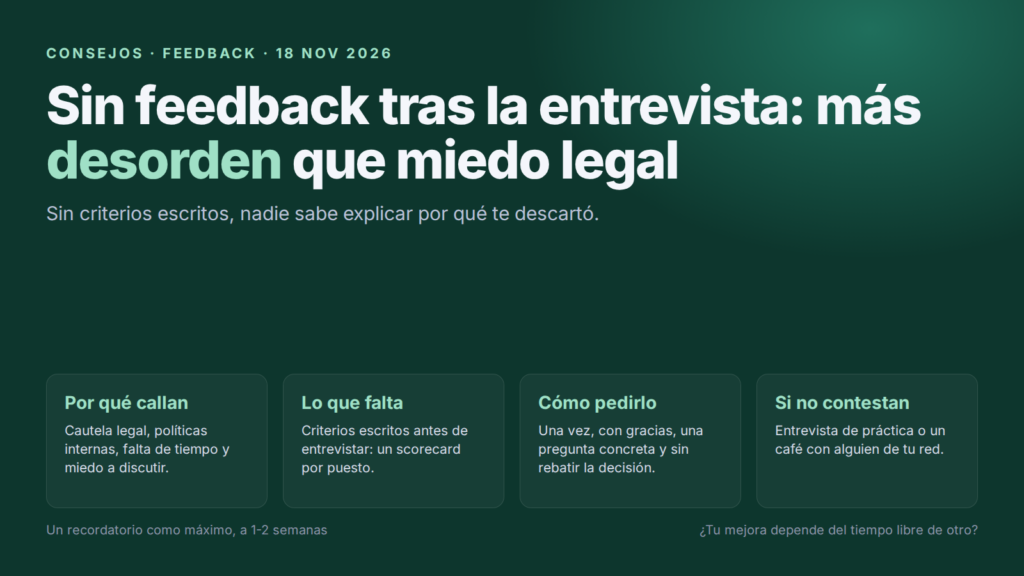
Almost nobody gives feedback after a rejection, and it’s usually blamed on legal fears. Our reading is more everyday: lack of time and of written criteria. We explain what to expect and how to ask politely, without jeopardising a future application.
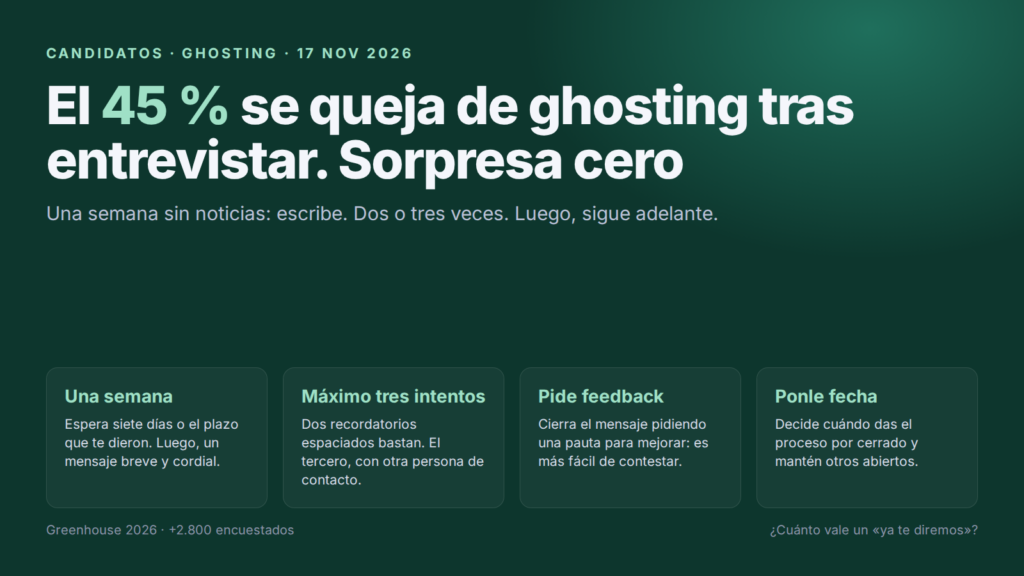
Silence after an interview is common: according to Greenhouse, 45% of those who interviewed cited it as a complaint. Understanding why companies go quiet, without pointing fingers, helps you not take it personally and know what to do in the meantime.
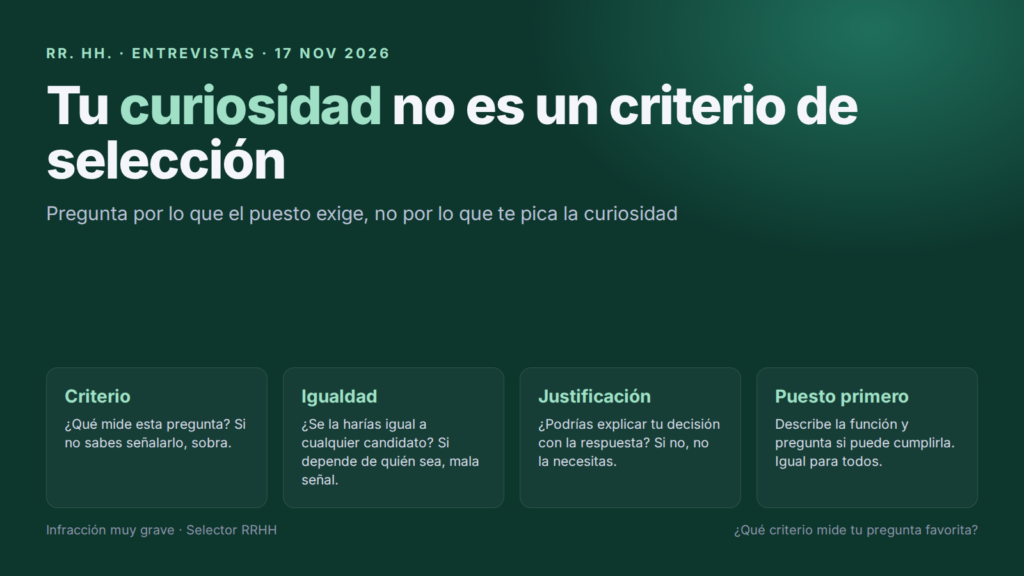
The limits of an interview fit in one rule: if you can’t link the question to a criterion for the role, it doesn’t belong. We give you an “instead of this, ask this” list, and explain why sticking to criteria set in advance also makes it easier to give feedback.
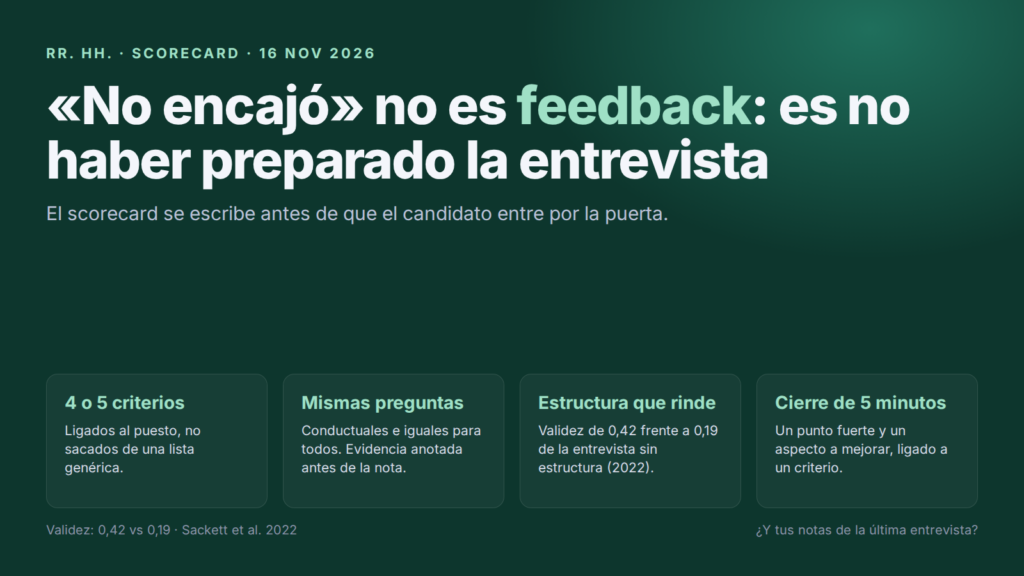
Without criteria and notes taken during the conversation, giving a candidate feedback is risky and slow. A 4- or 5-criterion scorecard, prepared in advance and filled in live, changes that: feedback takes minutes and has a basis. Template included.
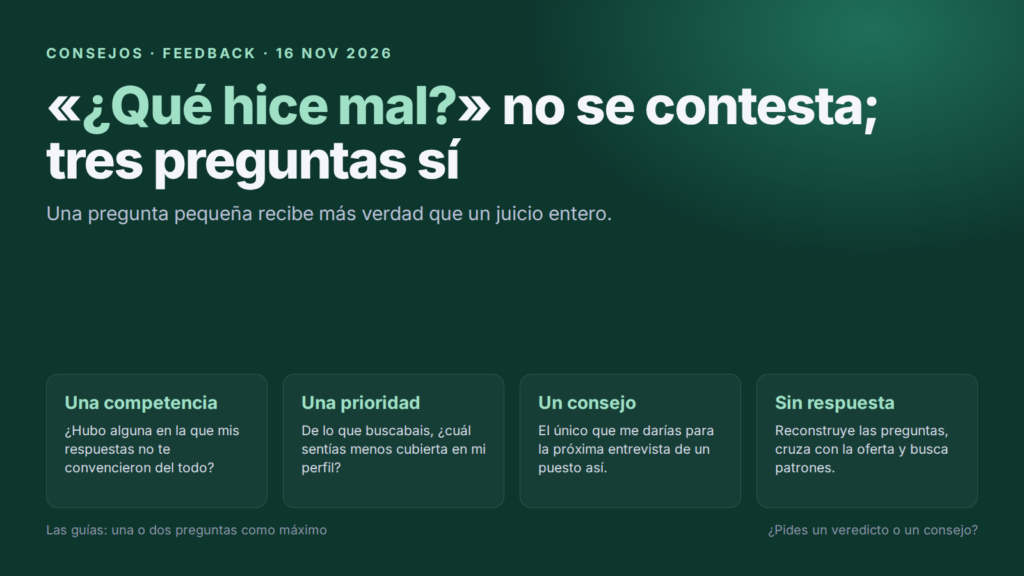
“What did I do wrong?” usually gets a polite non-answer. Three narrower questions (one competence, one priority of the role and one tip) are easier to answer and give more useful clues. If nobody replies, we leave you a self-assessment method.
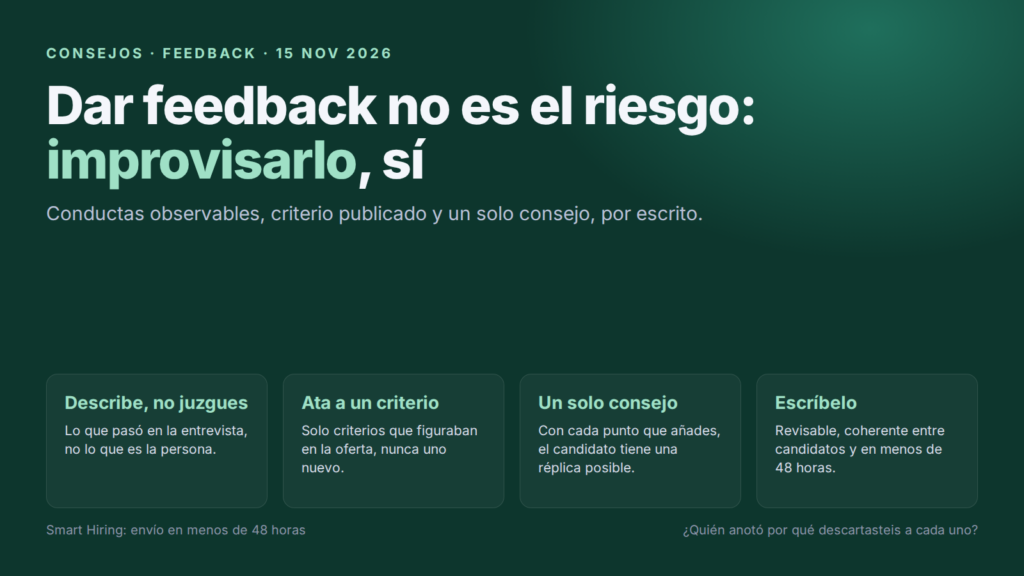
HR guides keep saying “be careful”, but rarely give concrete phrases. According to the sources we reviewed, the risk isn’t in giving feedback but in giving it badly. What protects you is anchoring it to the role’s criteria and to observable behaviour.
Spanish-language guides repeat a 7-to-10-day wait, but none explains where that figure comes from. The weeks-long waits on forums come from huge processes. We suggest a timeline by type of process, with a first follow-up and a point to look at other processes.
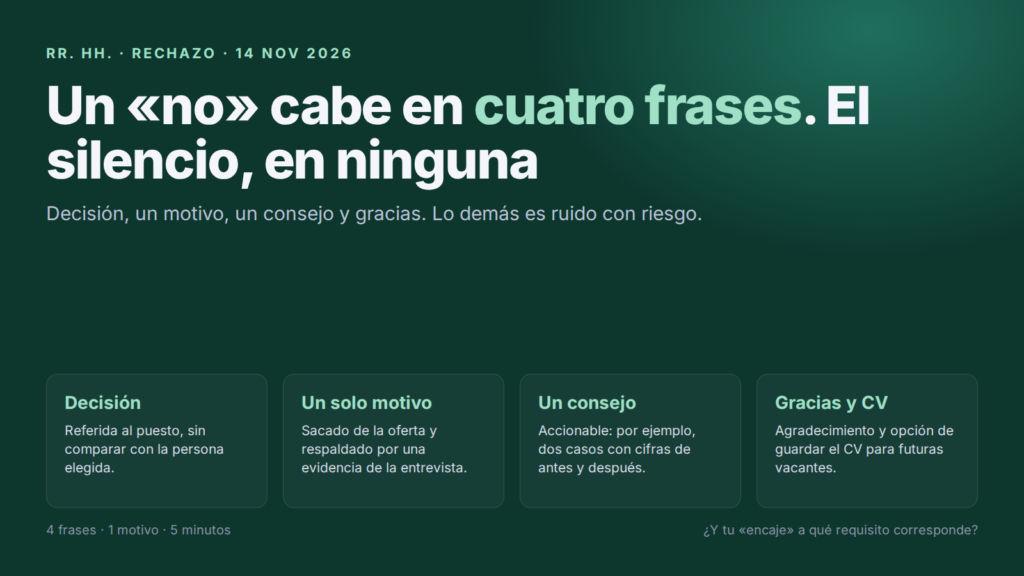
A useful rejection email fits in four sentences: one reason tied to the role, one actionable tip and a grateful close. The hard part isn’t the template; it’s choosing which reason to share and which phrases to leave out, so you can give feedback without fear.
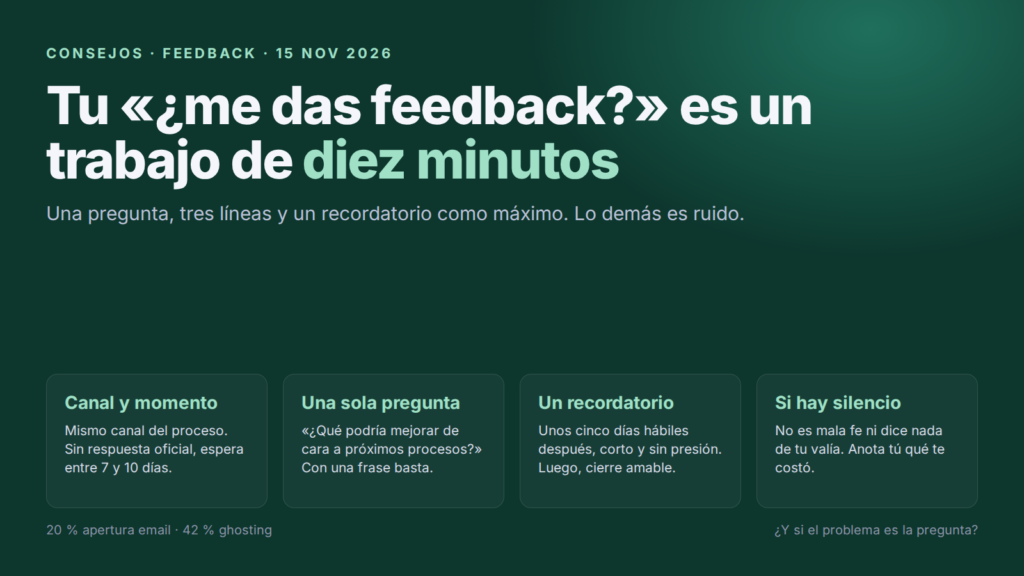
Almost every guide gives the same thank-you template, but hardly any explain why your message goes unanswered. The key is to ask for one specific, easy-to-answer thing, and to follow up once at most.