Rejected without an explanation: three questions that work better than “What did I do wrong?”
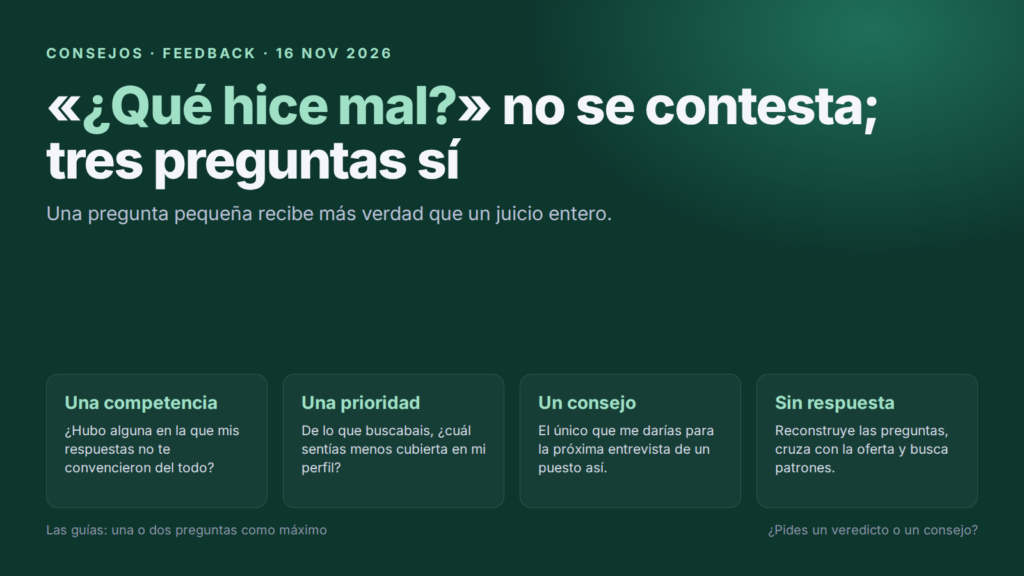
If the recruiter gives no details, don’t ask them for a verdict: ask a small, easy-to-answer question about a competence, about a priority of the role or about a tip for next time. If they still don’t reply, you can work out for yourself what may have gone wrong with five checks on your own interview. Below you’ll find the phrases, ready to adapt and copy.
Why does “What did I do wrong?” almost never work?
Because it’s a huge question for someone who has little time and probably little desire to get into a discussion. Jobularity notes that “Why didn’t I get the job?” is too broad, sounds like a challenge and invites the safe answer that says nothing. A narrow, forward-looking question, on the other hand, gets a more honest answer because it doesn’t sound like an appeal against the decision. Upjourney reaches the same conclusion: open questions of this kind rarely produce anything useful.
There’s also a human factor. Indeed points out that the interviewer may hesitate to give a rejected candidate their honest opinion, and that asking for advice or help, instead of demanding an answer, makes them more comfortable. And Forage suggests putting yourself in their shoes before writing: what can they answer in two minutes without committing themselves?
How many questions should you ask?
The guides agree on cutting back. Arcadia University advises asking one or two, depending on what the rejection note said or what you suspect weighed most. Forbes goes further: a single specific question, making it clear you don’t expect a long analysis. That’s why we give you three options here to choose one, not to send all together.
Which three questions can you copy?
Each one narrows the ground in a different way. Pick the one that best fits what you suspect. The phrases are our own adaptations of that principle, not quotes from the guides.
1. About a competence
Use it when you’re unsure how you answered a specific part of the interview:
“Was there a competence, for example [project management / client communication / leadership], where my answers didn’t fully convince you?”
2. About a priority of the role
Use it when you don’t know whether the problem was your profile or how you presented it. It’s an adaptation of the idea Jobularity suggests: let the recruiter choose between several possible causes instead of writing an explanation.
“Of what you were looking for in the role, which priority did you feel my profile covered least: experience in [X], the level of responsibility or something else?”
3. About a tip for next time
It’s the easiest to answer, because it doesn’t require criticising anyone: it asks for a recommendation, not a judgement.
“If you had to give me just one tip for my next interview for a role like this, what would it be?”
How to adapt them to the channel
- Email: thank them for the decision, ask a single question and add an easy way out: “One sentence is fine, and I understand it isn’t always possible.”
- A call where they tell you you’ve been rejected: you can ask on the spot. Ask your question and wait: PEGSTAFF recommends leaving time to answer after each question, and asking for concrete examples if the answer is vague.
- Short message (LinkedIn or similar): use question 3, which fits on one line: “Thanks for letting me know. Any tip to improve in processes like this one?”
If the rejection message explicitly says no explanations will be given, respect it. Upjourney recommends this when the message asks you not to get in touch.
How do you receive the answer so it’s useful?
The answer may be brief, nuanced or not match how you see yourself. Arcadia University stresses being receptive and reminds you that their point of view may not align with yours or with what you think the role required. In practice:
- Don’t argue or justify yourself. If you need to clarify something, ask for an example: “Could you tell me at what point you noticed it?”
- Say thank you in one line. Closing well leaves a good last impression, whether or not you get an answer.
- Write the answer down exactly as given, without interpreting it, and compare it later with other interviews.
What if the recruiter doesn’t reply, or answers with generalities?
It happens, and it doesn’t mean you can’t learn anything. This five-step self-assessment works with the information you already have:
- Reconstruct the questions they asked you. Monster gives a clear example: if they asked why you changed jobs several times in a few years, there were probably doubts about your career path. What they keep asking about usually points to what worries them.
- Go back to the job ad. Underline the ad’s three priorities and check whether your answers covered them with an example, not just with claims.
- Review your stories. Did they have context, your specific role and a result? Generic answers with no figures or facts are a common, fixable mistake.
- Get a second opinion. Forage suggests directing your energy towards a mentor or career coach when the interviewer isn’t going to answer. Upjourney adds industry contacts, people with hiring experience and mock interviews.
- Look for patterns, not culprits. A single interview can be lost for a thousand reasons that have nothing to do with you. If the same doubt comes up in three processes, that’s your priority for improvement.
Why some companies don’t give explanations
According to Final Round AI, legal and HR constraints lead many companies to have policies against written feedback after a rejection, especially in final stages. It isn’t necessarily a lack of interest in you. If you have doubts about your rights in a specific process, consult an employment law professional.
Is it worth asking even if the answer never comes?
Yes, because it costs a minute and the gain is twofold: the chance of a valuable clue, and practice at turning a rejection into information. Asking for feedback after an interview is possible and simple if the question is small, polite and easy to answer. Our position is clear: don’t wait for others to explain what happened. Ask one specific thing and, with or without an answer, do your own analysis that same week, while the interview is still fresh.
Frequently asked questions
What should I ask a recruiter to find out why I was rejected?
Avoid “What did I do wrong?” and choose a narrow question: about a specific competence, about which priority of the role they felt your profile covered least, or about a single tip for your next interview. The guides recommend asking one or two questions at most.
What should I do if the recruiter doesn’t reply?
Do a self-assessment: reconstruct the questions they asked you, compare them with the job ad’s priorities, check whether your examples had context and results, and get a second opinion from a mentor, an industry contact or a mock interview.
Can I ask for feedback if I was rejected on a call?
Yes. If they tell you about the rejection by phone, you can ask your question there and then and leave a pause for them to answer. If they can’t go into detail, thank them and ask whether you can send them a short question in writing.
